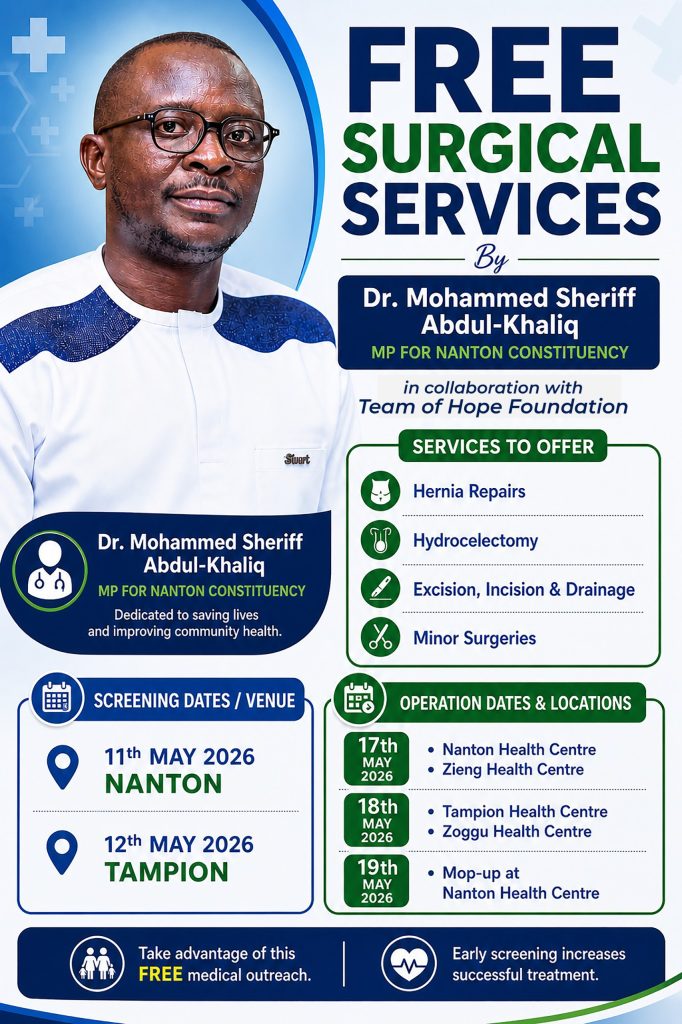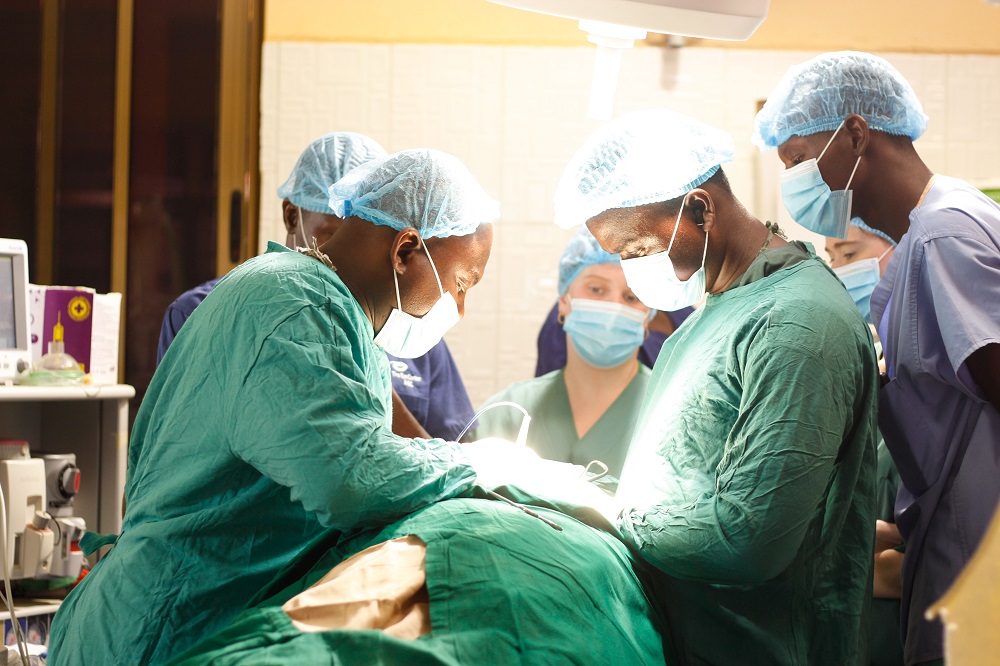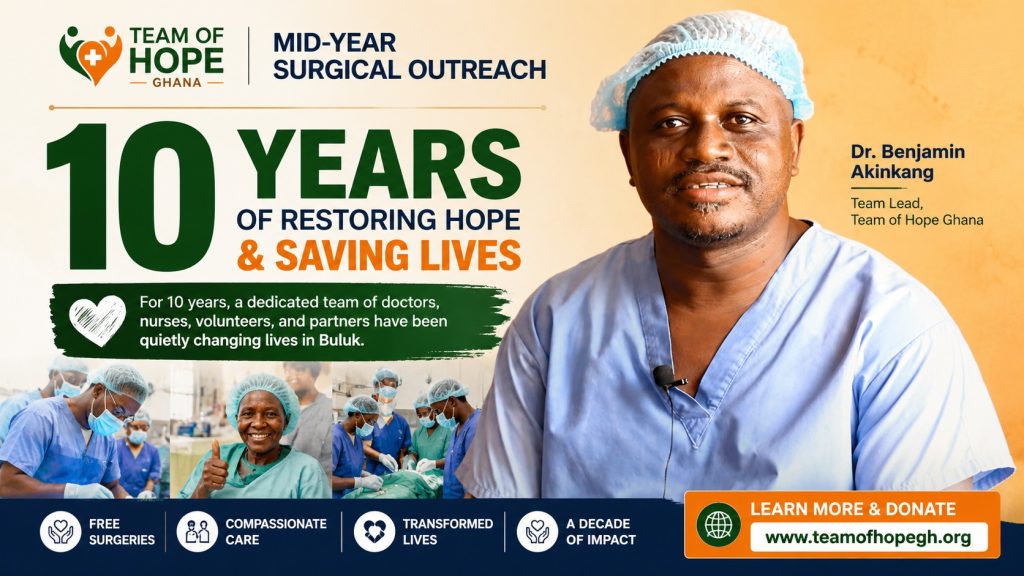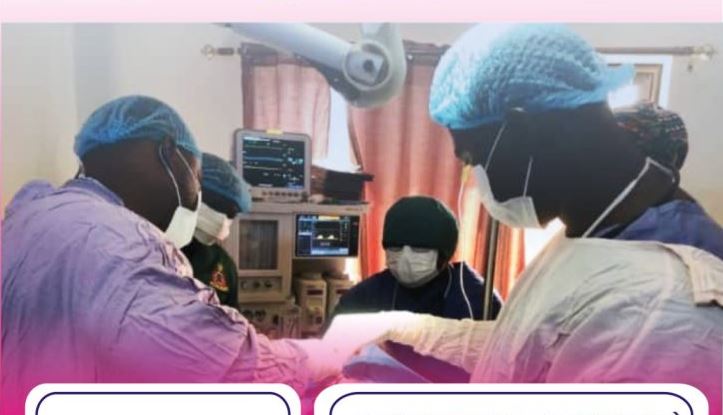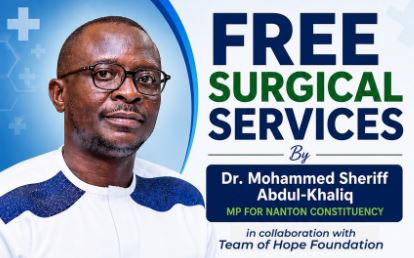
Residents of the Nanton Constituency in the Northern Region are set to benefit from a major free surgical outreach initiative spearheaded by Member of Parliament Dr. Mohammed Sheriff Abdul-Khaliq. The intervention is being carried out in collaboration with the Team of Hope Foundation, aimed at improving access to essential healthcare services for underserved communities.
The outreach will provide a wide range of free surgical procedures, including hernia repairs, hydrocelectomy, excision, incision and drainage, as well as other minor surgeries.
Screening Dates and Venues
Medical screening exercises have been scheduled to identify and prepare patients ahead of the surgeries:
- May 11, 2026 – Nanton
- May 12, 2026 – Tampion
Health officials emphasize that early screening significantly increases the chances of successful treatment, urging residents to participate promptly.
Surgery Schedule and Locations
Following the screening phase, surgical procedures will be conducted across multiple health facilities within the constituency:
- May 17, 2026 – Nanton Health Centre and Zieng Health Center
- May 18, 2026 – Tampion Health Center and Zoggu Health Center
- May 19, 2026 – Mop-up exercise at Nanton Health Centre
Call to Action for Residents
Dr. Abdul-Khaliq has called on all constituents, especially those suffering from conditions requiring minor surgical intervention, to take full advantage of the initiative. He stressed that the program is part of ongoing efforts to reduce healthcare disparities and improve the well-being of residents in the constituency.
“This outreach is an opportunity for individuals who may not afford surgical care to receive quality medical attention at no cost,” the MP noted.
Improving Access to Healthcare in Rural Ghana
The initiative reflects a growing trend of public-private partnerships in Ghana’s healthcare delivery system, where policymakers and non-profit organizations collaborate to bring critical services closer to the people.
With limited access to specialized care in many rural communities, such interventions are expected to have a significant impact on public health outcomes, particularly for treatable conditions that often go unattended due to financial constraints.
Residents are encouraged to attend the screening sessions early and follow medical guidance to ensure eligibility and successful treatment.